
The other day I sat with my friend Jackie, and he was recounting the last days of his friend Tyler, who passed away back in August.
I knew Tyler. I have known him for many, many years. He loved my singing voice and did not hesitate to tell me every chance he got. I remember seeing his posts as he documented his journey with cancer. And then the day came when he died.
I was shocked, heartbroken, and also angry. Perhaps I read the text wrong.
Jenn: “We lost Tyler today. Rest in peace 08/29/2025 6:19pm. My heart aches.”
After some time passed, I replied back: “Ugh! So many deaths 😭💔!”
When I got word of his passing, I had just arrived at Riga International Airport. I was excited for the next month of adventure and possibilities—making new friends and connections, seeing old ones, catching up.

But instead, I was hit with the news.
And it wasn’t just Tyler.
I had dealt with another death that came suddenly, out of nowhere, just a month prior. “Doug perhaps died of a broken heart,” I told myself. It was sudden and hard and shocking. In the back of my mind, I kept trying to make it make sense: Doug had so much loss in such a short amount of time, his heart probably gave out. It was better for me to hold it that way.
He died of a massive stroke.
Doug had lost his wife back in November of 2024—someone I had just seen at a wedding a few weeks before she passed. Then his sister died several months later. And then a catastrophic event happened in the town he lived in: the July 4th flood in the Texas Hill Country, where I used to live, and where many of my friends and family still live.
It was one loss after another, after another.
But then, all of a sudden, I started to feel the weight of the impending possibility of death. Of the end.
So when Jackie and I sat down to smoke and enjoy our coffee—with an added shot of Kavanagh Irish Cream, him with a cigar, and me with my pipe—I didn’t realize what was waiting for me in that conversation. In the back of my mind I thought: “Maybe Jackie needs to process this as much as I need to hear it.”
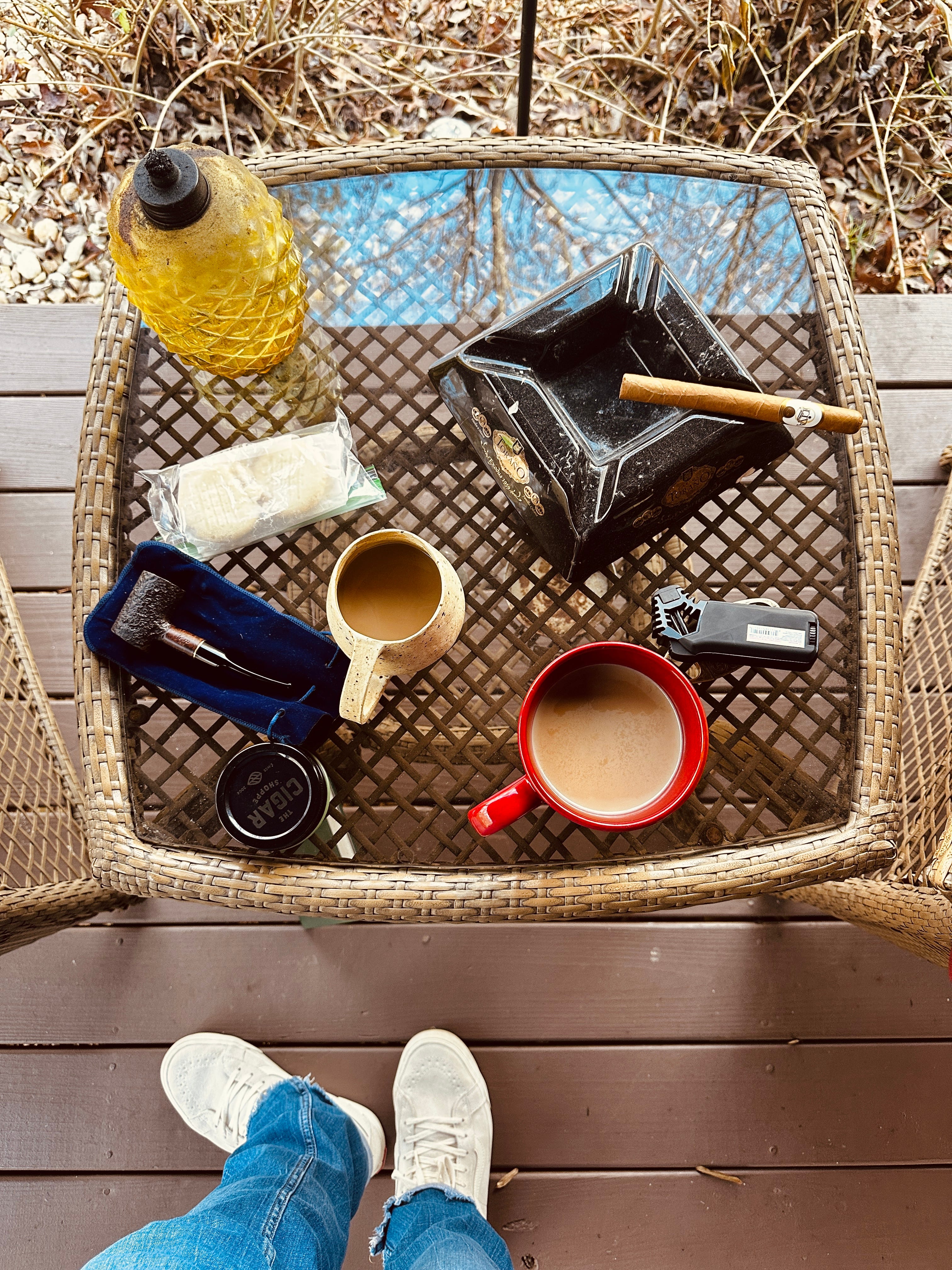
At first, it was ok. I was listening like any of our other conversations. But then, all of a sudden, I started to feel the weight of the impending possibility of death. Of the end. As if I was with Tyler in those final days.
Jackie told me there was a chance Tyler might still be here had he seen the doctor several weeks prior. And I felt it: the weight of time pressing up against him. I felt it. Boy did I feel it. Heavy. Like an elephant on my chest. A rush of “fucking hell I can’t breathe.”
About 30 minutes in, I just started to cry.
It hit me like a wave. A slow-motion tsunami. An overwhelming wave. And when it hit, the tears came fast—like someone turned on a faucet. I could feel myself holding back, trying to stay composed.
And then I remembered something someone told me recently: “Isa, you don’t have to do shit. All you have to do is feel!”
And so that’s what I did.
Right there. In that moment. Not caring what Jackie would think.
I took my glasses off and the tears just kept falling and falling and falling.
My friend looked up and said, “Oh sorry dude, I can stop talking about this, dang!”
There is a piece of music attached as always.
🎧 Headphones recommended.
And I swear, I saw his eyes getting red and teary at one point too.
But truthfully, I needed him to keep going.
To honor Tyler.
To hear about his final days.
To let my friend say it out loud.
There’s something about saying shit out loud.
Even if it was his fifth, tenth, or hundredth time telling the same story, he probably needed to recount it… again.
And I needed to hear it for the first time.
“No dude, keep going. It’s ok, I’m ok.”
Even as I type this, I have tears running down my face… again.
It was such a hard year that I don’t even know if I have properly grieved all the losses. There have been many. So many.
“Isa, you don’t have to do shit. All you have to do is feel!”
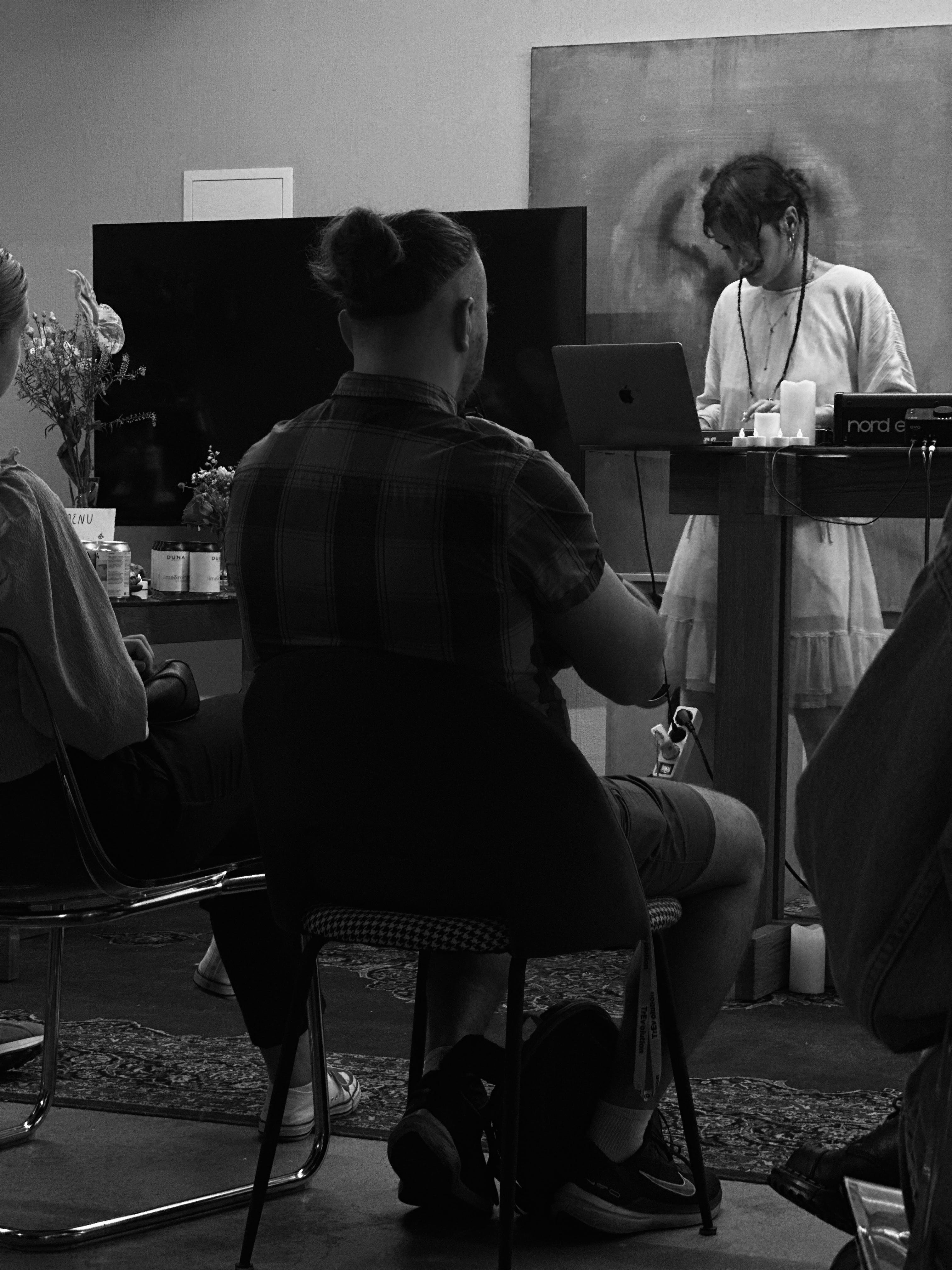
The day I got the news of Tyler’s death, I landed, met up with my friend, and we caught up and hung out. And the next day we hung out again before her evening concert.
There was no time to grieve.
Except when I’m in my hotel room, alone, exhausted from travel, feeling sickness creeping in, and just wanting to slip into bed and shut my eyes—and ignore the fact that Tyler took his last labored breath. God, I hate cancer.

I don’t know how to hurt well. Or at least, I’m learning how.
I do what I can to block, stuff, avoid—but grief overrides all my efforts, all my logic.
And it spills out.
Messy.
Out of nowhere.
I’d love to think I have no problems working it out.
Grief.
Pain.
Trauma.
Hurt.
But for someone who does the work of healing and integrating, I struggle with facing it, feeling it, sitting with it. I do. Its a fight, before its surrender. Ask my mentors.
Seeing grief as a teacher rather than a problem that needs to be fixed—that’s the challenge.
Richard Rohr invites us in this way:
“Grief isn’t something from which to run … we must learn to remain open to our grief, to wait in patient expectation for what it has to teach us.”
When I sat with my friend Jackie, we weren’t thinking we would be talking about our friend who passed away this year. But this is what happened. This is where our time outside took us. This is what human vulnerability and connection through loss is and does.
It allowed him to say it out loud, which I bet is what he needed to do to integrate what happened.
And it gave me space to feel the loss.
Because I hadn’t. I couldn’t.
Engaging grief is important for relational and communal healing.
I think grief asks for something: presence.
And it connects us because loss is the one language we all end up speaking, sooner or later. If there’s a way to “do” grief, I believe it’s not by fixing it, but by letting it move in and through us—letting it be witnessed, even—and letting it tell the truth about what mattered.
So if you’re carrying loss right now, here are a few simple practices that have helped me make space for grief as a teacher, and let it become connection instead of isolation:
Name the loss out loud.
Let someone witness you. One safe person, one honest check-in: “Can I tell you what happened and not have you fix it?” I think both Jackie and I needed each other as witnesses. I didn’t have answers. He processed. And in that, I got to feel. He got time to perhaps integrate.
Don’t confuse grief with weakness. If you feel angry, numb, relieved, wrecked, tender—all of it is valid. Grief isn’t one emotion.
Grief is meant to be shared. Isolation intensifies pain, while giving grief a witness metabolizes it.
There is a piece of music attached as always.
🎧 Headphones recommended.